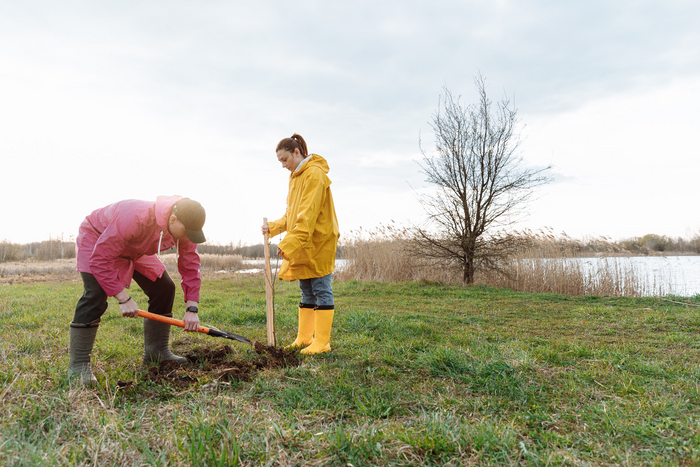
- We were selling our house, watching The Beverly Hillbillies, and wanted to know what was under the yard before we handed over the keys. No kit existed for a regular person. So we built one.
- Every sample runs in our own lab in Redding, California, on one of our own instruments, through the same steps every time, and I check the data myself before your report goes out.
- It's for anyone who has looked at their land and thought "what if." Your report comes back in plain English, with a fun fact for every element and the not-so-fun facts for the heavy metals.
It started with a house we were about to sell
In the spring of 2025, Mari and I were two people with a baby daughter, a short list of business ideas in our shared Notes app, and a house we were putting on the market. I was getting out of the Air Force. We knew we wanted to build something together. We just didn't have the right idea yet.
I had been introducing Mari to the old show, The Beverly Hillbillies. The one where Jed shoots at the ground and strikes oil.
So one night Mari asked what seemed like an obvious question. "What if we had gold on our land? We're about to sell this place, and we have no idea what's under it. Isn't there a kit for that?"
I went looking. There wasn't. There were kits for your garden, which tell you about pH and nutrients. There were labs for farms and mining companies. There was nothing for a person who owns a yard and wants to know what's in it. We looked at each other and it clicked. We added it to the list, and the more we looked into it, the more it was the only idea on the list either of us actually wanted to build.
Nobody would take a homeowner seriously
Here's roughly how it went when I called the labs that do this kind of analysis:
- Are you a mining company? No.
- A farmer, then? No.
- A bank? No.
- Um, bye. (Or we just got ghosted.)
(I know because I actually reached out to them. A lot of them.) The analysis was never secret, and it was never hard. Somewhere along the way, the people who could do it decided a homeowner wasn't worth the bench time. Not to mention the results were inaccessible to a normal person.
It kept happening after we started building, too. When I set up our online store, it asked me to pick a category for the product. The closest thing on the list was "gardening." We are not a gardening company. We're the thing that didn't have a category yet.
So we built the lab ourselves
Most kits you can mail in don't test anything themselves. They send your sample to whichever third-party lab is closest, and you never find out who ran it or how. We didn't want that. We wanted every sample to go through the same steps, on one of our instruments, checked by the same person, so the report you get back is one you can trust.
That meant building our own lab.
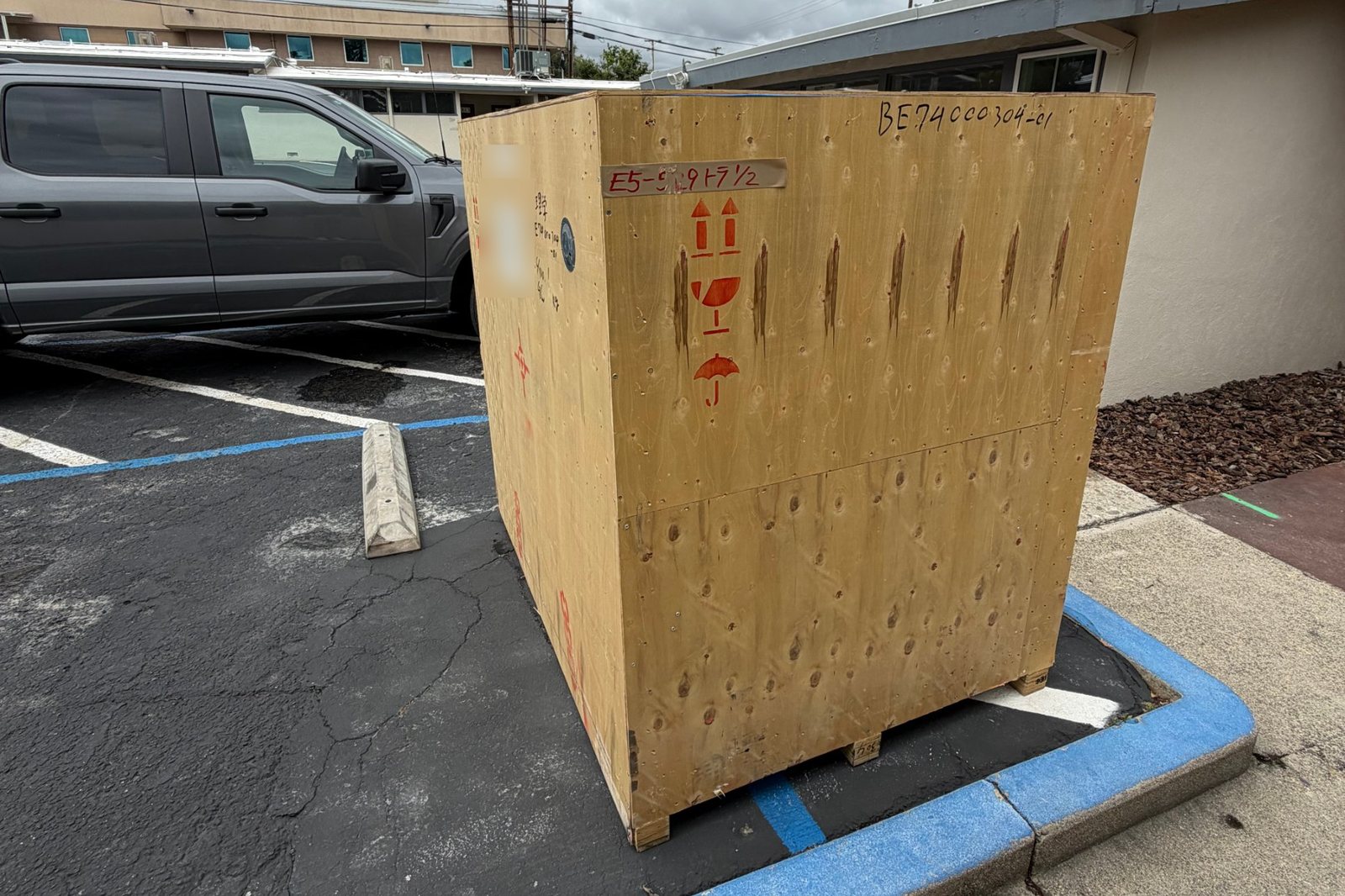
One of the instruments arrived in three crates, two on the first day and one later, and the shipping company left them in the parking lot. It weighed about 2,000 pounds. It took four movers to get it out of the crate, and it barely fit through the front door. Much to our surprise, it did not fit through the second door inside, because I had measured that doorway before the doorway was framed (rookie mistake). To get it through that door we had to take a part off the machine and broke a dolly in the process. It lives in the main room to this day.
We thought we'd be live by September 2025. We launched in the summer of 2026. Every one of those extra months went into getting the kit and the report to the point where we'd be proud to hand them to you.
The day the first kit showed up
We'd been looking at it on a screen for a year. Then a box arrived with the real thing in it, and I was ecstatic for days. Mari says I almost cried (I think I did, honestly). It sat on our dining table like a centerpiece, and we showed it to everyone who came over.
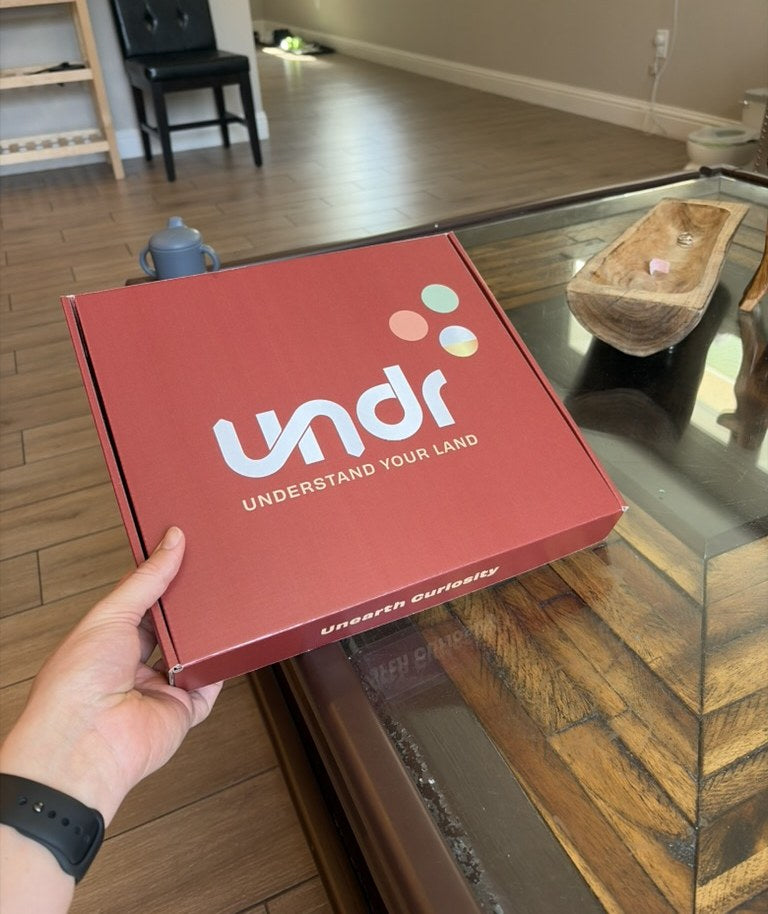
We'd fussed over every piece of it. Every icon on the box. Every line on the instruction card. We even shrink-wrap the box so the shipping label goes on the plastic, and when you peel the wrap off you're holding a clean box with no label on it. Nobody asked us for that. We just wanted the first thing you see to be the box, not a boring brown package.
Who we are
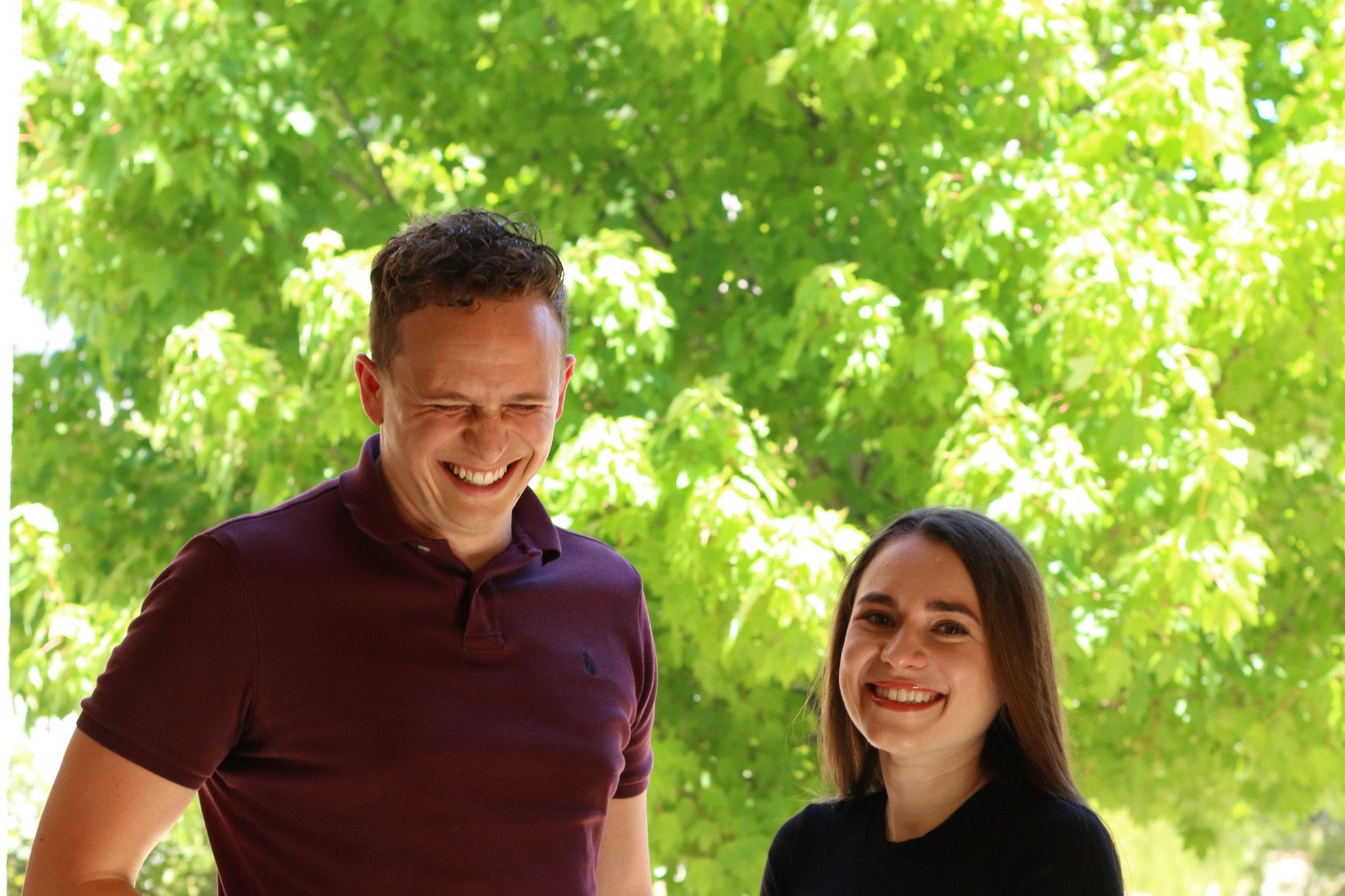
I'm Carson. I was a captain in the U.S. Air Force, working in intelligence, most of it data analysis. I have a Bachelor of Science from the Air Force Academy and a master's from Harvard. I run the lab and, to my own surprise, love it. My favorite part is going through your sample's data to make sure what's in your report matches what one of the instruments measured.
Mari went to Tufts for public health, then to Harvard Law, then into big law. Then we had a daughter and everything changed. She's the one who said the report couldn't read like a lab report: no jargon, fun facts, something you could go through with your kids.
We moved to Redding for reasons that had nothing to do with gold. We now run a lab that screens for it in the middle of Gold Rush country. I'd like to say we planned that. The credentials and the photo are on the About page, if you want them.
Faith is the number one thing in our lives, and it's a big part of why the company runs the way it does. It's what kept us grounded when we wanted to quit, and it's where our standards come from: excellence in the product, integrity in what we tell you, and treating every person we deal with, customer or partner, like they're worth our time, because they are.
Who this is for
Anyone who has ever looked at a patch of their land and thought "what if."
What if there's gold or silver in it. What if there's oil. What if that one corner of the yard that looks different is different for a reason. I think "what if" is one of the most fun questions you can ask in life, and we built a company on it.
It's also for the parent who wants to know what's in the ground their kid plays in. Our daughter loves the grass and puts everything in her mouth, and Mari wanted to know about heavy metals long before there was a company. And it's for the science teacher, the homeschooler, and the family looking for something to do on a Saturday that isn't a screen.
What we hope you feel
When the box lands, we want you to open it and think, this is fun. When the report lands, we want you to read it and think, I had no idea that was there.
Every element in your report gets its own page: a fun fact, or a not-so-fun fact if it's a heavy metal, then what it is, why it matters to you, and what people usually do next. If something comes back elevated, you won't be left staring at a number. The resources are right there in the report. If something comes back rare, you'll know why that's a big deal.
Your result is about your sample. No one else's. Your name and address are never for sale. For every kit we sell we plant a tree with Plant with Purpose, and ten percent of our profits go to community organizations.
A few things that have nothing to do with land
Beach, forest or desert?
One of us said desert. The other said beach. They both have lots of sand.
Favorite food?
I grew up in South Carolina, where "ethnic food" meant Mexican. Then Mari, whose parents are from Brazil, took me to a Brazilian restaurant. It's right up there with Italian, which is the other answer.
Favorite country?
Italy. Between the two of us we've been there more times than we can count on one hand, and we got married in Santorini, which tells you how we feel about the Southern Mediterranean.
Soccer?
Mari grew up on it. Her first game in the U.S. was a shock: everyone was sitting down.
What happens at the thousandth order?
We go to Italy. That's a real plan.
That's us. If you have questions, curiosities or ideas to share, we want to know about it. If you're new to all this, Land Testing 101 explains what a test can and can't tell you. And if there's a patch of land you've been wondering about, you know where to find us.

- No expert required. From $99, no consultant, no minimum.
- Ten minutes and your own mailbox. Shovel, pouches and prepaid return shipping in the box.
- Every number explained, high or low, against common soil ranges.